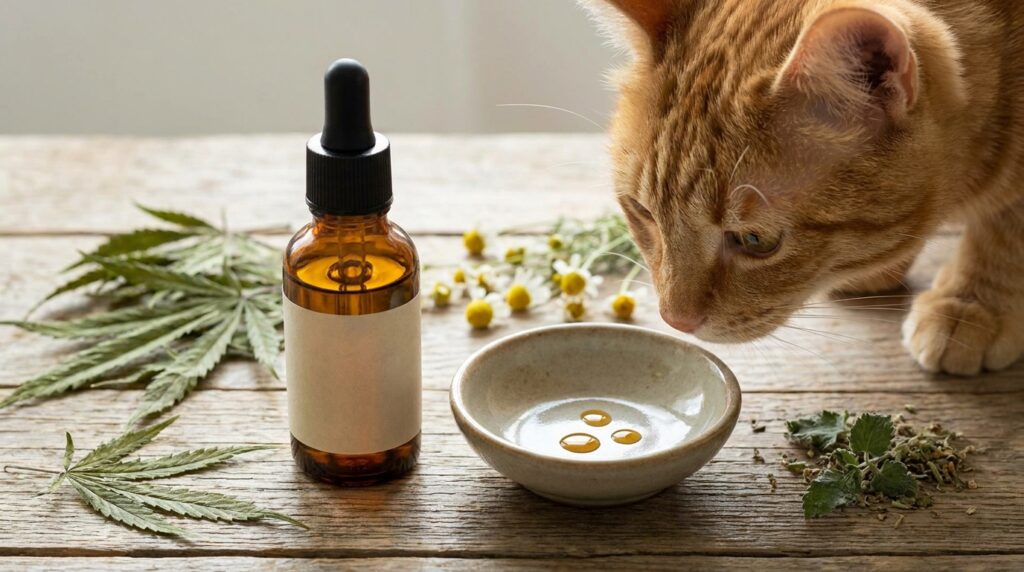
Cats have strong opinions about anything that touches their mouths. A dropper that looks harmless to a person can look like an ambush to a cat, and one bad experience can last for weeks.
The practical side of giving CBD oil for cats deserves as much attention as the choice of product. Technique, timing, and calm handling decide whether a routine becomes easy or turns into a daily wrestling match.
This guide covers preparation, four ways to deliver the oil, and fixes for the problems that tend to appear in the first two weeks. The amount itself comes from a veterinarian, and nothing here replaces that advice.
Before the First Dose
Gather the Supplies
A short checklist saves scrambling later:
- The bottle, with its box or a photo of the batch number
- A small notebook or a notes app
- A clean oral syringe, if the vet recommends measuring in milliliters
- A few of the cat’s favorite treats
- A small dish or lick mat
Wash hands before and after handling the oil. Cats groom thoroughly, and residue left on skin ends up in their mouths.
Pick the Right Moment
A cat that has just been chased by a child or startled by a vacuum will not cooperate. Early morning or a quiet evening, when the cat is relaxed and a little hungry, tends to go better.
Many owners give the oil near a meal. Food can make the experience more pleasant, and a routine tied to feeding time is easier to remember.
Confirm the Amount in Writing
Drops differ in size from one dropper to another, so a vet’s amount should come in a clear unit, such as a specific volume or a number of drops from the bottle in hand. Write it on a sticky note and attach it to the box.
A change in product, even from the same brand, calls for a fresh check. Strength per milliliter can vary between formulas.
Four Ways to Give It
Quick Comparison
| Method | Works best for | Watch out for |
|---|---|---|
| Mixed into wet food | Easygoing eaters | Cat leaves part of the portion |
| Offered on a lick mat or spoon | Cats that like licking | Flavor and smell refusal |
| Oral syringe into the cheek | Cats that tolerate handling | Stress, aspiration if rushed |
| Pill pocket or soft treat | Treat-motivated cats | Extra calories |
Mixing into Food
Stir the amount into a spoonful of wet food, not the whole bowl. A cat that eats only half of a large portion has also eaten only half of the oil, and the log will not reflect it.
Offer the spoonful first, on an empty stomach, then serve the rest of the meal once it is gone. If the cat refuses, resist the urge to hide the oil in a different food every day. Cats notice changes, and new smells can put them off their regular diet.
Lick Mats and Spoons
Some cats happily lick oil from a spoon, especially a fish-flavored one. A lick mat spreads a little wet food thin, and the oil goes on top. The slow licking keeps the cat busy and makes the routine feel like a treat.
Wash the mat after each use. Oil goes rancid quickly on silicone and can attract ants.
Syringe into the Cheek
Vets use this technique often. Hold the cat gently against a wall or in a towel wrap if it tolerates one, slide the tip of the syringe into the side of the mouth behind the canine tooth, and release a small amount slowly. Give the cat time to swallow before the next squirt.
Never squirt straight to the back of the throat or push the syringe while the head is tilted back. Both increase the risk of choking or inhaling the oil. Many vet clinics are glad to demonstrate the technique in person, and a short lesson beats a video.
Make It a Routine
Same Time, Same Place
Cats like predictability. Giving the oil at the same time and in the same spot each day lets the cat know what to expect, and a calm routine lowers stress for both sides.
Pair the oil with something good, such as a brushing session or a play break, once the dose is done. Reward after, not before.
What to Do When a Cat Refuses
Push too hard and the next attempt gets harder. If a cat turns its head or walks away, wait ten minutes and try again with a calmer approach. Switching delivery methods is better than forcing the original one.
A persistent refusal is information. It can mean the flavor, the carrier oil, or the delivery style is the problem. A vet or a cat-friendly practice can suggest alternatives.
Troubleshooting Common Hiccups
Drooling right after a dose often points to taste. Try a different carrier oil or a smaller serving at a time. Vomiting soon after can mean the amount was too much, the oil upset the stomach, or the cat was stressed. Note it down and let the vet know.
Signs that call for a prompt call to a clinic include repeated vomiting, wobbliness, extreme sleepiness, or a cat that stops eating.
Storage and Travel
Keep the bottle capped, upright, and away from heat. A pantry shelf beats a car dashboard. For trips, pack the box with the batch number and the vet’s written instructions, and keep the bottle in a sealed bag in case of leaks.
Boarding facilities and pet sitters need the amount spelled out clearly. Verbal instructions get lost.
Final Thoughts
Success with CBD oil for cats depends as much on technique as on the product. Calm timing, an exact amount from the vet, and a method that suits the cat’s temperament make the routine easier. Notes about what happens each day help the next vet visit. When a cat resists, a change of method works better than force.